
Tag Archives: Indiantraditionalwear#
As the festive season on….let us look at a glance of Saree the trends for 2019 and how it can be related to our traditional wear…
Saree
A traditional Indian wear with 6 to 9 yard length of material which is worn in 18 (basic styles – reference end of this article) different draping styles with varieties of materials in different parts of country, creates a wave of music when it blends with your body.
Let’s have a look on some of the traditional draping styles with modern fusion look which are popular this year.
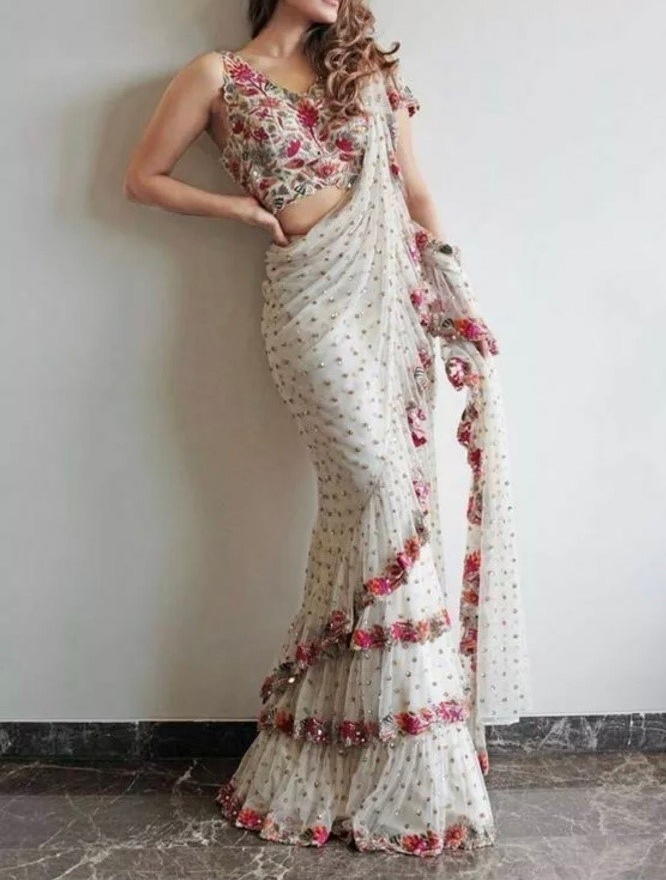
Ruffle truffle:
This gorgeous 70’s magic trend blended with pastels emanate an air of sheer beauty.
Recommendation: More feminine look yet bold when stitched on the border of your saree or even blouse, it lends quite a quirky yet suave look, balances with dollops of sophistication. Synthetic materials like Ryan, chiffon goes well with this, no need to think of add-on jewelry – ruffle style rewards jewelry!!
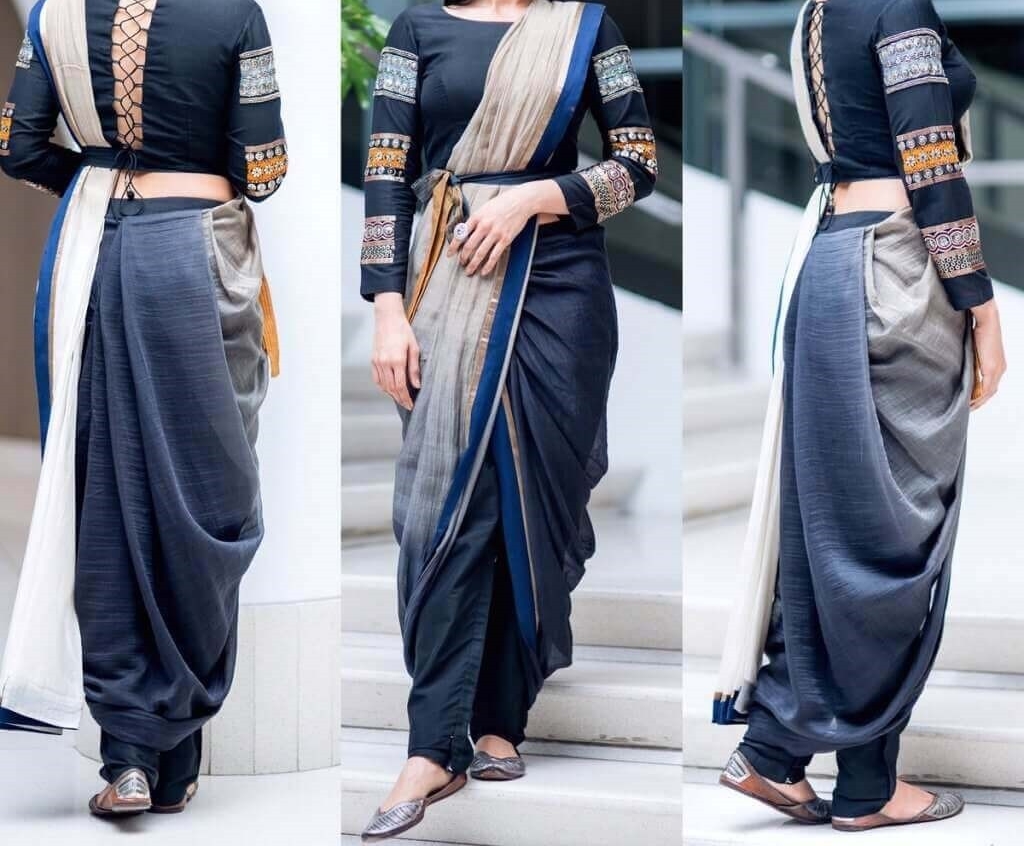
Pant Saree:
Something very interesting was showcased in the Lakme fashion on stage, gone are the days when a petticoat was the essential element for draping a saree, it is replaced with a cool pair of Pants!
Pant sarees certainly making waves in the fashion space.
Recommendation: A scissor cut pant under your saree and drape it so as to completely show off this unique style trend! Cotton (can think of plain pant with Kalamkari printed saree) or synthetic the drape to your body will blend to the shape very well with the combo of this Pant Saree trend. Jewelry – depending on the color of the saree, wear trendy long ear rings in gold or black metal.
Belted Saree:
Sounds new? This is a vintage style of accessorizing the saree with ‘kamarpatta or oddiyanam’ which is commonly found during 60’s and 70’s era. Same is being found in traditional Indian ceremonies, where a gold or carved metal belt is worn on saree.
Recommendation: A small twist is to this style, one can play around with different kinds of belts such as metallic, leather, fancy, beaded, broad or sleek and recommended materials are silk, synthetic and crape. The belt not only keeps your pleats in place but also makes the look neat. Jewelry – threaded ear rings and chockers are recommended while choosing a leather belt or Rose gold accessories recommended if you choose a metallic belt.

Denim:
Saree in Denim? I am definitely not joking! This broke all the rules at Amazon Indian Fashion week with a unique twist distressed denim and deconstructed silhouettes.
Recommendation: Distressed Denim saree paired with a crop top is a classic yet trendy outfit. One can even pair it with a denim pant and saree with a leather belt. Jewelry – A bold oxidized jhumkha, hmmm interesting isn’t it?

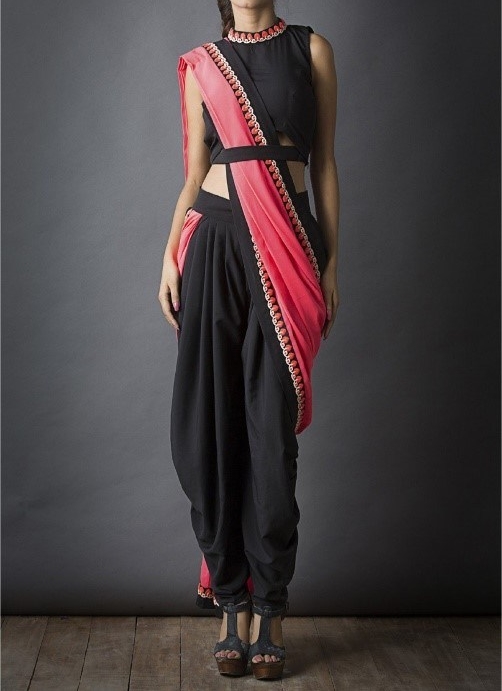
Dhoti Style saree:
Remember those traditional nine yard (Tamil Nadu) draping Or Nauari (Maharashtra) draping style? If you don’t know, now the new trend is dhoti style draping!
This style of saree comes in pre-draped form too. (there is much difference from Pant saree, this should be worn without an inner skirt or pant – can wear a skin tight for comfort)
Recommendation: More suitable for Mehandi, Sangeet occasions. Cotton or synthetic materials suitable for this style of draping. Yet again chose to wear with a belt or not it is trendy and stylish!!
Jewelry – black or white metal accessories are recommended to maintain that trendy look!
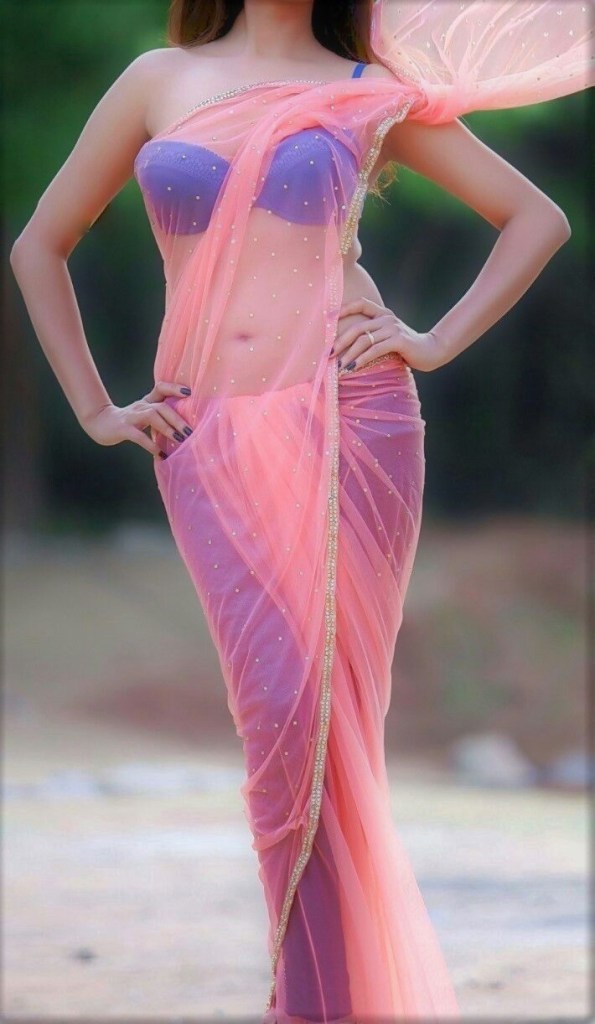
Clear & Sheer Sarees:
Because of their versatile characteristic and enigmatic visual appeal, clear and sheer sarees provides a touch of glamour in saree which is one of the oldest traditional wears, with a see-through feature makes them an exotic investment.
Recommendation: this is highly recommended for evening party wherein you can choose a variety of light shade saree with a pair of gold or silver blouse! Jewelry – just long ear rings with stones recommended to have a classy appearance.
Check out for the above styles to be worn on your Ethinic day, wedding party, sangeet, which will make a difference and grab the eyes of the crowd.
PS: Few traditional saree drapes herein
Athpourey shari from Bengal; Nivi and Kappulu drape from Andhra Pradesh; Mekhela chador from Assam; Nauvari saree from Maharashtra; Mohiniattam and Namboothiri from Kerala; Seedha pallu from Gujarat, UP and Odisha; Surguja from Chhattisgarh; Pinkosu from (Madurai) Tamil Nadu; Bootheyara, Coorgi and Halakki Vokkaliga Style from Karnataka; Gol sari (Parsi drape); Kunbi drape from Goa; Madisaru from Tamil Nadu; Santhal drape from Jharkhand; Phanek and Innaphi from Manipur.
 Follow My Wardrobe